
 TAB Argentina
 TAB Australia
 TAB Austria
 TAB Canada
 TAB Chile
 TAB Czech Republic
 TAB England
 TAB France
 TAB Germany
 TAB India
 TAB Ireland
 TAB Israel
 TAB Lichtenstein
 TAB Mexico
 TAB Moldova
 TAB Netherlands
 TAB New Zealand
 TAB Paraguay
 TAB Portugal
 TAB Romania
 TAB Scotland
 TAB Slovakia
 TAB South Africa
 TAB Spain
 TAB Switzerland
 TAB United States
 TAB Wales
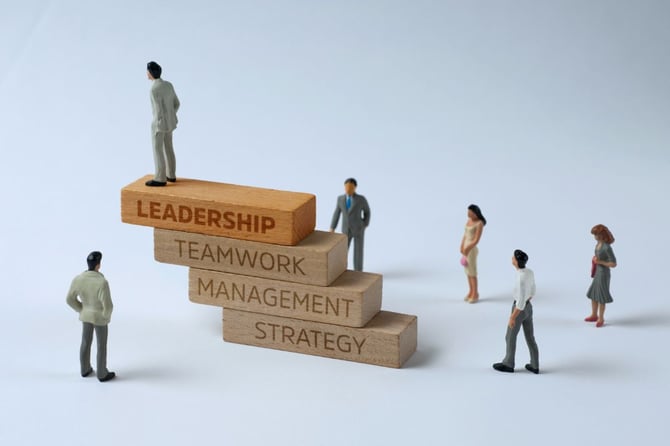
Small business owners usually spot a leadership gap the same way: you feel it in your calendar.
You plan to spend the week on growth — sales, strategy, key hires. Instead, your day fills with questions, conflict, and decisions that should never reach your desk. That pattern rarely means you have bad people. More often, it means you have underdeveloped leadership habits in the middle of the business.
Some managers are promoted because they performed well, not because they were trained to lead. The Alternative Board has identified 15 concrete signs your managers might need leadership development, drawn from patterns small businesses see every day. We've broken them into three succinct categories: Performance and Accountability, Communication and Systems, and People and Culture. For each sign, you will find a description of what it looks like in practice and why it matters.
The symptoms below are a diagnostic, not a judgment. Once you can name the gap, you can close it.
Performance and Accountability
These first signs cluster around the same root cause: managers who struggle to set a clear bar, make confident decisions, and hold people to consistent standards.
Sign 1: There's a bottleneck.
If you are the “help desk” for your own company, your managers lack decision-making confidence and clear decision rights. The fix involves defining what managers own versus what must escalate, and training them to bring options rather than just problems. Every question that lands on your desk instead of being resolved one level down is a signal that your managers have not been given the tools, authority, or practice to lead independently. Over time, that pattern costs you hours every week and quietly signals to your team that real decisions only happen at the top.
Sign 2: Difficult conversations get avoided or explode.
In healthy teams, feedback happens early, calmly, and with a clear next step. When managers either avoid hard conversations or let them boil over, the pattern usually points to a skill gap: they lack a simple structure, practice handling pushback, and a routine that makes feedback feel normal rather than punitive. Avoidance is the more common failure mode in small businesses — managers delay until a small performance issue becomes a termination conversation, or until a team member quits and cites “no feedback” in the exit interview. Teaching a simple feedback model and building it into a regular cadence is one of the fastest ways to raise management quality across the board.
Sign 3: Accountability is inconsistent.
Two people do the same job under two totally different sets of rules. One manager lets missed deadlines slide; another calls it out immediately. This inconsistency creates confusion, frustration among top performers, and uneven results across teams. When accountability depends on personality rather than process, your best people notice first — they resent carrying extra load while others coast, and they start to question whether leadership is paying attention. A shared performance management process, with clear expectations and consistent follow-through, removes the guesswork and makes fairness a system feature instead of a manager-by-manager gamble.
Sign 4: Expectations are unclear.
Good people work hard and still miss the target, because nobody defined “done” in plain language. When managers skip the work of setting clear expectations, teams fill the gap with guesswork — and guesswork produces rework. The downstream cost is real: two people doing the same task differently, projects bouncing back for revisions, and a creeping sense that the bar keeps moving. A simple “definition of done” for recurring work — who owns it, what “good” looks like, and when it is due — is one of the highest-leverage habits a manager can build.
Sign 5: Decision-making is slow, inconsistent, or reversible.
Managers hesitate, teams wait, and then everyone rehashes the same call the following week. This “decision wobble” creates a hidden tax on the business: lost time, lower confidence in leadership, and execution that stalls mid-project. Part of the problem is structural — managers often lack shared criteria for what makes a good decision, or they fear being wrong and keep options open past the point of usefulness. Training managers to decide with a clear framework, communicate the reasoning, and hold the line on reversals is a skill that pays back immediately in team speed and morale.
Communication and Systems
Communication issues show up as recurring friction in how work moves, how decisions get made, and how information travels across the business.
Sign 6: Communication breakdowns are frequent.
If “I didn’t know” is a weekly phrase in your business, you have a leadership system problem. Rework, missed handoffs, and last-minute surprises rarely come from careless employees. They come from managers who lack consistent communication rhythms and closed-loop habits. The fix is less about telling people to communicate better and more about installing a repeatable structure: a weekly priorities update, a decision log, and a closed-loop confirmation habit so that “I heard you” becomes “I can repeat the plan.” When managers own those rhythms, information stops traveling by rumor and starts traveling by design.
Sign 7: Meetings feel unproductive.
Meetings end with “let’s circle back,” nobody is sure what got decided, and the same topics come back next week. This is one of the clearest signals that managers lack the leadership habits that turn conversation into outcomes. The cost compounds fast: in a team of six, one hour of unproductive meetings per week equals more than 300 hours of lost capacity per year. Requiring an agenda, a decision point, and a written action list at the close of every meeting is a simple standard that most managers have never been explicitly taught to hold.
Sign 8: Conflict is either avoided or escalated.
In healthy teams, people disagree, sort it out, and move forward. When managers either let tension fester or let it explode, they signal a gap in conflict skills: how to open a hard conversation, stay focused on shared goals, and guide people to a resolution. Avoided conflict goes underground — it shows up as side conversations, passive resistance, and team members who stop bringing real problems to their manager. Escalated conflict pulls you, the owner, back into the middle of issues that should be resolved one level below you. Both patterns are fixable with the right structure and practice.
Sign 9: Change initiatives land poorly at the team level.
The strategy makes sense at the top. At the team level, employees ask “What does this mean for me on Monday?” When managers cannot answer that clearly, you get resistance, confusion, and half-hearted follow-through — not because the change was wrong, but because the translation was missing. Most change failures in small businesses are not strategy failures — they are communication and adoption failures that live at the manager layer. A manager who can explain the “why,” define the role-level impact, and reinforce the new behavior consistently is the difference between a change that sticks and one that quietly dies in the hallway.
Sign 10: Hiring and onboarding feel random.
Two managers hire for the same role in completely different ways. Onboarding depends on who has time that week. When hiring and onboarding stay informal, you do not have a talent problem — you have a leadership consistency problem. The first 30 to 90 days set the tone for whether a new hire builds the right habits, understands what success looks like, and feels supported enough to ask questions before small mistakes become big ones. Standardized interview scorecards, a written 30/60/90-day plan, and a weekly one-on-one rhythm during onboarding are basic tools that pay for themselves in faster ramp time and fewer early departures.
People and Culture
Sometimes signs of poor leadership all point to the human side of management — how managers develop, motivate, and retain the people around them. They tend to be the slowest to surface and the most expensive when ignored.
Sign 11: Morale is slipping, and managers don’t notice.
People stop volunteering ideas, do just enough, and avoid extra responsibility. Then a resignation arrives that makes no sense. Morale rarely crashes in a single day — it fades because managers miss the early signals or do not know what to do when they see them. The early warning signs are easy to overlook: a little less energy in meetings, a little more silence in one-on-ones, a few more sick days. Managers who build stay interviews and monthly pulse checks into their routine catch those signals weeks before they turn into turnover, giving you time to address the root cause rather than replace the person.
Sign 12: Employee engagement is low.
When managers focus only on tasks and skip the “why,” the job starts to feel like a checklist. Engagement drops when there is no line of sight to customer impact, no growth path, and no controllable wins the team can point to week over week. Research consistently shows that the single biggest driver of engagement is the quality of the relationship between an employee and their direct manager — not pay, not perks, not office design. When managers learn to connect daily work to purpose, create visible progress, and treat recognition as a leadership habit rather than an annual event, engagement tends to follow.
Sign 13: Performance is sliding.
Execution problems rarely start on the shop floor. They usually trace back to weak coaching, unclear priorities, and soft accountability at the manager level. When managers correct mistakes after the fact but never coach to a standard ahead of time, the same issues repeat. Sliding performance is also self-reinforcing: top performers grow frustrated watching standards erode, customers start to notice, and the business loses the margin it needs to invest in the fixes. Catching the pattern early — through leading indicators like first-pass quality rate or on-time completion — gives you a chance to course-correct before customers vote with their feet.
Sign 14: High performers aren’t growing — or they’re leaving.
Strong employees want challenge, clarity, and advocacy. When managers lack the skills to coach, delegate real responsibility, and open doors, high performers feel it first. Exit interviews tend to say “no growth” or “no future” — and both trace back to management. Losing a high performer costs the business an estimated 50 to 200 percent of that person’s annual salary when you factor in recruiting, onboarding, and lost productivity — and it is almost always preventable. A simple development plan with one stretch project, one skill focus, and a quarterly growth conversation is often all it takes to signal that the business is invested in their future.
Sign 15: A leadership approach doesn’t fit a diverse team.
When a manager uses the same tone, cadence, and expectations with everyone, results vary in ways that feel mysterious. Different people need different communication styles, feedback frequencies, and support levels. A one-size-fits-all approach is a skill gap, and it is fixable. Managers who learn to match their style to the competence and confidence of each team member — more structure for newer employees, more autonomy for experienced ones — get more consistent performance across the whole team. The same goes for recognition: some people want public acknowledgment, others want a private word, and most managers have never been taught to simply ask.
Do My Managers Need Leadership Development?
One principle worth keeping: the businesses that close the leadership gaps fastest are the ones that treat manager development the way they treat sales or operations as a recurring system with a cadence, metrics, and accountability.
If your gaps point to management execution — missed deadlines, unclear ownership, inconsistent feedback — TAB's Hi-Map program gives managers the practical systems and habits to run their teams with consistency. If they point to leadership alignment — shifting priorities, low buy-in, a team that lacks direction — StratPro is where that work happens.
Most businesses need both. Start with whichever gap showed up most in the 15 signs above.