
 TAB Argentina
 TAB Australia
 TAB Austria
 TAB Canada
 TAB Chile
 TAB Czech Republic
 TAB England
 TAB France
 TAB Germany
 TAB India
 TAB Ireland
 TAB Israel
 TAB Lichtenstein
 TAB Mexico
 TAB Moldova
 TAB Netherlands
 TAB New Zealand
 TAB Paraguay
 TAB Portugal
 TAB Romania
 TAB Scotland
 TAB Slovakia
 TAB South Africa
 TAB Spain
 TAB Switzerland
 TAB United States
 TAB Wales
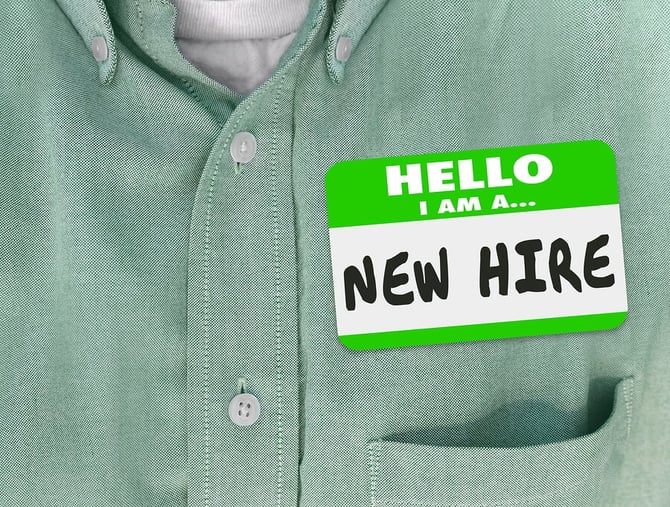
Is a structured new employee orientation process in place in your business, or does each new hire get a different experience on their first day? Many businesses “get” the value of a well-planned onboarding experience, but others still play it by ear. They fail to understand the link between a quality orientation experience and prospects for long-term retention (which, after all, is the ultimate goal when any employee is hired).
Consider these eye-opening statistics:
- Businesses lose up to 25% of new employees every year.
- New hires can take as much as 12-18 months “to gain proficiency comparable to their tenured co-workers.”
- Businesses employing a “standard onboarding process” see more than 50% greater productivity in their new hires.
- More than 75% of new employees who achieve their first “official performance milestone” went through formal orientation training.
If your onboarding process could use some fine-tuning, keep these key action steps in mind:
1. Put a documented plan in place. First impressions really do matter. If new hires go through what feels like a sloppy, disorganized and uninformative onboarding process, they’ll likely form negative opinions about the company they’re working for that never go away. To offset this impression, document a planned, step-by-step process that remains consistent, regardless of who’s been hired and who’s overseeing the orientation experience.
2. Get paperwork out of the way. Too many new hire programs submerge the rookie employee in a swamp of paperwork, taking up precious hours on his or her first day that might be more efficiently used to bring that person “into the fold.” As much as possible, send HR and benefits-related paperwork to the new employee ahead of time, so necessary documentation can be at least partly completed before that first step into the workplace as a new employee.
3. Avoid overwhelming employees on their first day. It’s important to manage your expectations regarding an employee’s first day on the job. You want them up and working, but if you pile on too much information—or assign them a potentially difficult task—you risk losing their attention and motivation. “Employee retention is a marathon,” notes business consultant Larry Alton. “You don’t want to exhaust them on day one.”
Want additional insight? Read 7 Steps for an Effective Hiring Process now to learn more

4. Design a welcoming video. A brief, informative video will likely be a welcome change of pace during the onboarding process. Think of it as “selling” your company—that is, reinforcing the new hire’s belief that he or she made the right choice in accepting the position. Present a little about the company’s history, emphasize aspects of the culture you want to get them excited about, and include a welcome message from the CEO. It’s a significant first step in making people feel part of the organization.
5. Choose your orientation language carefully. Every company has its own jargon, but there’s no reason new employees must be versed in it on their first day at work. Be clear in all the language used during the onboarding process, avoiding technical terms and inside lingo no one can be expected to understand. It’s okay to introduce a couple of key phrases worth knowing, but for the most part, lay out the path ahead in language everyone can easily grasp.
6. Point the way towards additional resources. Most new hires will want to learn more about the company and its culture, just not all at once. Compile a list of resources, links on the company website, etc., and encourage individuals to find out more about their new workplace environment. Don’t make them waste time at home trying to locate materials that will help them better fit in.
7. Finally, give new employees something they can take home after their first day. Chances are, you offer branded items to customers—why not to new employees as well? Put together a welcome bag of these items, a sign of your appreciation for their first day of work. Carefully selected “branded swag,” while seemingly small, “encourages a great sense of welcome and belonging to your new hire.”
Want more advice on employee recruitment and retention? Find out if a TAB Board is right for you!